
The Need for Weapons Detection in Healthcare and Campus Environments
- dylanh037
- Dec 23, 2025
- 7 min read
By Dylan Hayes, CHPA, CPP

As an experienced physical security professional and industry contributor, I chose to write this article because I'm extremely passionate about developing safe and secure healthcare, education and workplace environments. More and more weapons detection screening systems are being deployed in to campus, organizations and businesses with good intent but poor execution and limited results.
Detecting some weapons creates a false sense of program effectiveness when 95% of weapons are being undetected. Keeping weapons outside buildings or off property can have a dramatic impact in the reduction of weapon violence, however, I notice consistent, significant, gaps and failures in weapons detection screening programs everywhere I visit. In my experience, weapons detection at non-government facilities is failing drastically at most organizations today.
Is this effort a smoke and mirrors approach to look like an organization cares about creating a safety culture and simply change the perspective of security for a campus or business or it to actually achieve the goal of detecting weapons to reduce threats and keep dangerous objects out of the environment. It is an extreme liability for an organization to implement weapons detection poorly and give a false sense of security. I have walked through many facilities and found that very few actually perform weapons detection screening that would receive an A+ rating. In fact many receive an F. Is the approach that "we are doing something" good enough? Is the money to deploy and support these operations creating consistent and effective outcomes? The answer for the industry is No. This article is based on my personal experience, knowledge and research of the industry and my collaboration with colleagues.
Hospitals implement weapons detection screening at emergency departments and other critical entrances for one key reason: violence in healthcare is rising faster than in almost any other industry. Hospitals, mental health/psychiatric units and emergency rooms are high-stress, emotionally charged environments where patients arrive in crisis, families are overwhelmed, and behavioral health challenges are common. Staff are assaulted, threatened, and verbally abused daily. Hospitals turn to weapons screening systems—like Evolv, Metrasens and Athena—not because it’s a nice-to-have, but because EDs are the most vulnerable portals to the entire hospital ecosystem.
Behavioral health patients, drug-seeking individuals, gang-related incidents, domestic disputes, and escalating wait-time frustration all contribute to an environment where weapons—knives, guns, metal tools, and makeshift objects—are a real risk. Screening is supposed to reduce this danger. Yet across the country, hospital leaders are unaware that their weapons detection systems are not delivering the safety outcomes they are expecting. Weapons detection must begin with risk relevance and clarity. Organizational leaders and security personnel must be clear about the outcomes desired and the capabilities and limitations of the technology, personnel and processes that perform this critical screening.
Full divesting and removal of objects just like going through TSA or accessing a courthouse may be unrealistic and not the desired experience in healthcare. Is everyone from the top down 100% clear which weapons are expected to be undetected when conducting a weapons screening?
Is it acceptable for smaller guns, knives, razor blades and needles to enter the perimeter of the facility?
Is it acceptable for hidden razor blades and metal objects to enter the ED, Mental Health/Psychiatric Units or the MRI area? Is the risk acceptance clear?
How often is the screening process being audited to ensure flawless execution without gaps?
Why? The failures usually fall into three categories: People, Process, and Technology.
Below is a breakdown of why your program may be underperforming—and the framework hospitals should adopt to fix it.
The Most Common and Overlooked Point of Failure - People

Technology doesn’t run itself—people do. And when your frontline staff aren’t focused or diligently following procedure, even the most advanced weapons detectors will fall short.
A. Inadequate Training
Many hospitals install a system and provide an initial training overview. That’s not training—that’s exposure. ED entrance staff need repeated:
Scenario-based practice (high-volume rushes, agitated patients, behavioral emergencies).
Step-by-step drills on alarm response.
Understanding of the system’s detection logic (what alerts, what doesn’t, what produces nuisance alarms).
The ability to differentiate patient belongings from true threat items.
Crisis de-escalation and communication skills.
Without this, staff will either underperform (not follow the basic screening procedures such as searching a bag or person) or underreact (ignoring alarms to keep the line moving).
B. Poor Staffing Levels
If one person is expected to manage a busy environment that includes:
Bag checks
Alarm responses
Directing patients
Operating the system
Addressing or securing identified weapons
De-escalation
Throughput coordination
…that system will fail.
Weapons detection screening in busy environments is only effective when at least two trained personnel are present—one managing the line and questions and another managing alarms. Many hospitals staff only one entry monitor, leading to missed threats or unsafe interactions. Consider the presence of a weapon or escalated individual. Wouldn’t additional staff support be required to assist in that moment?
C. Misaligned Roles, Skills and Responsibilities
Some hospitals assign screening to:
Security staff who rotate posts frequently
Environmental services employees
Patient access staff with no security background
Contract security services with reduced experience, limited professional security experience and inattention to detail
While these teams are excellent at their primary roles, they may not have the security mindset needed to manage a weapons-screening environment. Successful programs designate a consistent, trained, and ongoing tested, team with clear authority and expectations. The weakest and most common failure points I have personally come across is contract staff not following procedure and not appearing to care about conducting quality screenings. All the cost of the technology and staffing, all the procedures, all the expectations from leadership FAIL when an individual fails.
When Your Workflow Undermines Your Security - Process


Hospitals assume their tech is failing when the real issue is workflow design. A weapons detection system is only as strong as the processes wrapped around it.
A. Unclear Screening Policy
Many hospitals never formally define:
What items are prohibited
What happens when a weapon is detected
Whether staff must confiscate or require the visitor to store items in their vehicle
How to manage patients arriving by ambulance with possessions
How to manage patients and visitors with wheelchairs, walkers and strollers
Exceptions for law enforcement officers
Rules for vendors, contractors, and couriers
Without a clear policy, staff improvise—and inconsistency is the fastest path to system failure.
B. Ineffective Triage and Throughput Management
The ED can fill up fast. When the waiting room spills into the hallway, staff often:
Turn off screening temporarily
May be distracted and wave people through without responding to alarms
Allow groups to pass all at once
Let bags go uninspected to “keep the line moving”
Throughput pressure can destroy the integrity of a screening program. Screening must be non-negotiable, even during peak volume.
C. Lack of a Standardized Alarm-Response Procedure
If an alert occurs, do staff:
Ask the person to step aside?
Physically check belongings?
Use secondary screening tools?
Call security?
Allow the person to refuse?
A vague or inconsistent response leads to:
Missed weapons
Staff discomfort or fear
Patients becoming frustrated or aggressive
A scripted, repeatable, documented response, backed by operations and legal leadership is essential.
D. No Continuous Improvement Loop
Hospitals often install a system and never:
Audit alarm outcomes
Track what items are most commonly stopped
Review videos of failed detections
Adjust placement, staffing, or signage
Update training based on incident trends
Without data-driven improvement and audits, systems degrade quickly—especially with high staff turnover.
When the System Is Not Configured for Healthcare Realities - Technology
While people and process issues are more common, technology can fail as well—especially when vendors oversimplify how “automatic” weapons detection really is.
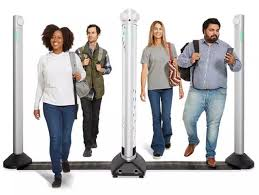

A. Improper Placement
Weapons detection systems need:
Straight walking paths
Adequate distance from metal infrastructure
Minimal ferromagnetic interference (wheelchairs, carts, stretchers)
A controlled entry lane
Emergency departments, however, often place systems:
In cramped vestibules
Near security desks
Next to metal-framed doors
In traffic pinch points
Misplacement contributes to false alarms, blind spots, and inaccurate detection.
B. Miscalibrated Sensitivity Settings or Wrong Technology Selected
Many systems use machine learning models that weigh:
Object signature
Density
Metal composition
Threat likelihood
Hospitals sometimes:
Turn sensitivity down to reduce nuisance alarms and allow more throughput
Turn it up to “be extra safe,” causing throughput problems
Apply the wrong threat profiles and tool for the wrong location
Break-down or move equipment without recalibrating with each set up
Use ineffective technology that does not detect small items like razor blades and needles. Hand wands depend on the skill of the operator and often cannot detect small blades or hidden objects even when used properly. Today there are more reliable tools that do not heavily depend on skilled use of wands or technology.
The result? Either dangerous items pass through—or the system constantly alerts on harmless objects.
C. Over-Reliance on AI
AI-based systems are helpful, but not magic. They are not 100% reliable, nor do they replace staff vigilance. Weapons detection still requires:
Human judgment
Bag reviews
Trained observation
Secondary screenings
Hospitals that assume the tech will “just work” inevitably experience failures.
D. Lack of Integration With Other Security Systems
Screening is most effective when combined with “hard-wired” interfaced tools, technology and processes (meaning forced processes that eliminate inconsistency) such as:
Video analytics
Visitor management
Panic buttons
Radio communication
Access control
Incident reporting systems
Running screening in isolation limits the ability to respond effectively when a threat is detected.
A Framework for Successful Weapons Detection Screening in Healthcare
To create a high-reliability program, hospitals need an integrated approach that balances people, process, and technology.
Below is a proven framework:
1. People Framework
Create a dedicated, trained screening team (security + patient access).
Train quarterly on:
Alarm response
De-escalation
High-stress scenario simulations
Behavioral threat recognition
Ensure minimum two-person staffing per screening point.
Assign clear authority for when to escalate and when to deny entry.
2. Process Framework
Develop comprehensive weapons screening policies: prohibited items, steps after detection, storage/return protocols, and exceptions.
Implement a standardized alarm-response script to improve consistency and reduce confrontation.
Create a throughput management plan for peak-volume hours.
Conduct monthly audits of performance, alarm data, and incident trends.
3. Technology Framework
Ensure systems are properly placed, tested, and adjusted for your environment.
Use correct threat profiles calibrated for healthcare realities.
Integrate with video, incident reporting, and communication systems.
Monitor and deploy technology firmware and software updates on a consistent schedule.
Test technology performance using a testing kit at the beginning of each shift and any time technology is unplugged, moved or network communication or power has been lost.
Conclusion
Weapons detection screening in healthcare is not failing because the technology is flawed. It’s failing because hospitals often underestimate the complexity of creating a high-reliability screening ecosystem in the fast-paced, high-risk environment of an emergency department or the challenging environment with mental health and psychiatric patients.
When people are trained, processes are clear, and technology is optimized, screening can significantly reduce weapons entering your facility—protecting staff, patients, and the entire hospital community.

Dylan Hayes is a 25-year physical security technology expert and previously acted as the physical security program leader for Seattle Children’s Hospital and Research Institute. He managed teams, operations, and technology that transformed the culture of safety and experience for staff, visitors, and patients. Currently he is Security Solutions NW Healthcare Consultant.


Comments